We create chemical compounds for products of the future
Noctiluca is a technology company that develops and produces high-performance chemical compounds for diverse applications.
Our specialization is OLED emitters. These chemical compounds emit light when electricity is applied and are a vital part of any OLED display, determining its color accuracy, contrast, and lifetime. The OLED (Organic Light Emitting Diode) display stack is made up of thin layers of organic materials. One of these layers, and perhaps the most important one, is the emitter – which actually converts electricity into visible light. This emitter and the rest of the organic materials together form a sub-pixel, the basic building block of an OLED display.
WHAT WE DO
We develop and produce chemical compounds for OLED displays, printed electronics, digital signage, lighting, organic photovoltaics and more. We also offer a comprehensive range of chemical services, including research and development (R&D).
About usMARKET
A market driven by innovation
We operate in the fast-growing market beyond the display industry, providing top-quality chemical compounds and services. We believe that every challenge in the field of organic chemistry has a solution, and Noctiluca is up to the task.
54 billion
The Global OLED Market size was estimated at USD 48.39 billion in 2022, is expected to reach USD 54.63 billion in 2023, and projected to grow at a CAGR of 13.83% reach USD 136.49 billion by 2030 Source
14.6 percent
OLED market CAGR Source
118.3 billion
The global lighting market size was $118.33 billion in 2019 & is projected to reach $163.72 billion by 2027, exhibiting a CAGR of 4.3% during forecast period. Source
148.4 billion
The global display market size was valued at USD 148.4 billion in 2021 and is projected to reach USD 177.1 billion by 2026. It is expected to grow at a CAGR of 3.6% Source
100 kg
Noctiluca has the capacity to manufacture up to 100 kg of high-performance materials yearly

Pelagia noctiluca is one of the most fascinating marine organisms due to its bioluminescence ability
An ability to produce and emit light by a living organism. In Latin nocti is the combining form of nox “night” and lux means “light”.As a market challenger, we see ourselves in this tiny sea creature, providing light from organic compounds for the photonics industry. Since emissive layers are the heart of every OLED, therefore we chose the heart of pelagia noctiluca to be our brand symbol.
Knowledge zone
One of the foundations of our mission is to educate and inform our investors and associates

Why investing in photonics is the future?
In the world of innovators there are a few words that define the future. One of them is certainly photonics. Its applications are wide and can make every industry more competitive
Read more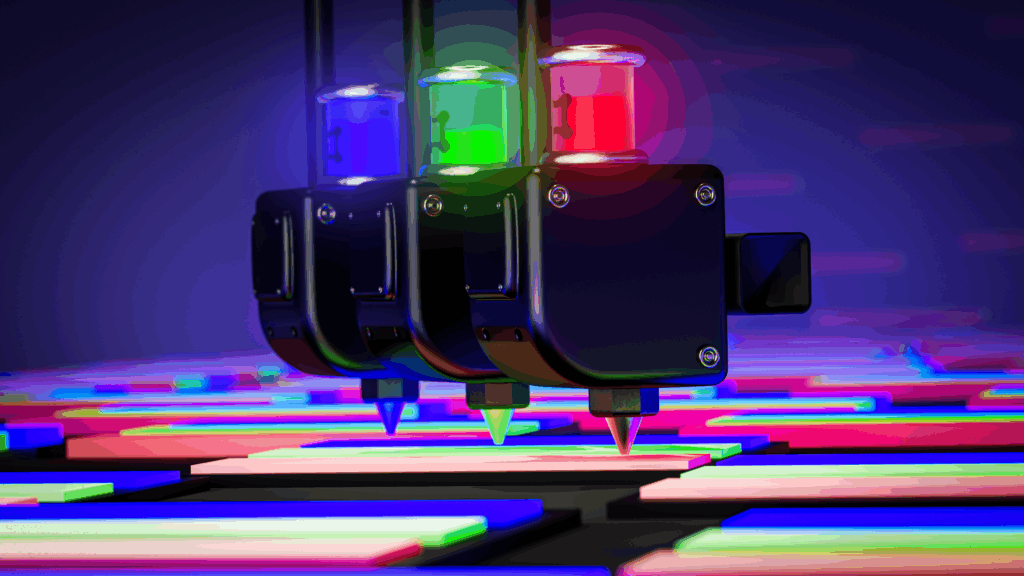
Chemical compounds for ink-jet printing
Noctiluca, a technology company known for developing next-gen emitters for OLED displays, is expanding its portfolio and further commits to product development activities to be the first global high-performance materials provider with a solution for each layer of OLED display.
– Almost every OLED manufacturer is currently involved in ink-jet printing (IJP) projects – big or small, out in the open or in stealth mode. Progress of tech companies promises that printed OLED displays will appear in commercial applications on a bigger scale within the next few years” – claims Mateusz Nowak, the company’s CCO.
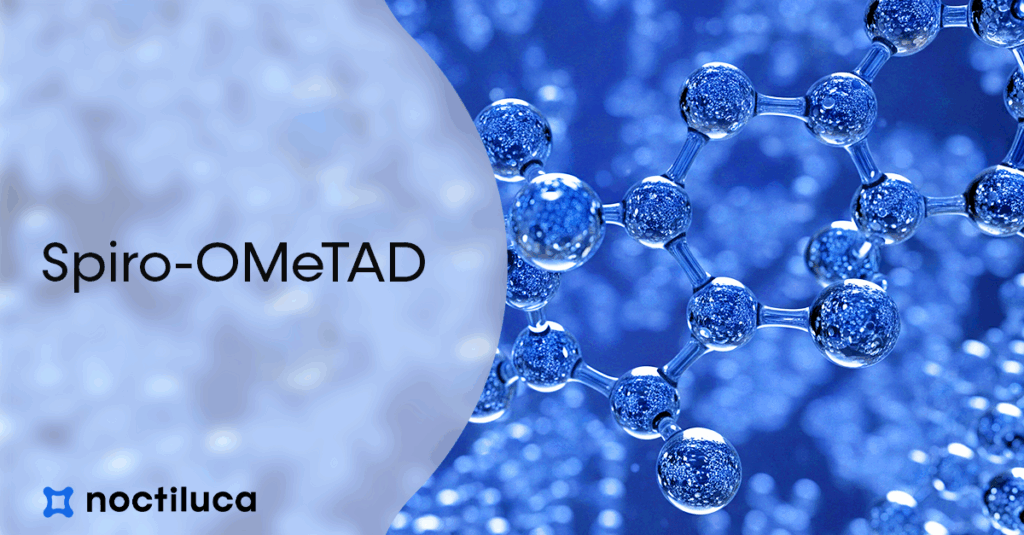
Chemical compound: Spiro-OMeTAD
Spiro-OMeTAD is a groundbreaking material in the field of organic electronics. Primarily used as a hole transport layer (HTL), it plays a critical role in enhancing the efficiency and performance of various organic-inorganic electronic devices, including perovskite solar cells (PSCs), organic light-emitting diodes (OLEDs), and polymer-based organic solar cells (OSCs).
Spiro-OMeTAD is characterized by stability, and excellent ability to conduct positive charge carriers.
Race for blue
Noctiluca, technology company listed on the Warsaw Stocke Exchange, has developed a breakthrough material for use on one of the OLED display layers. In laboratory tests in Korea, NCEIL-4 demonstrated a 15-fold increase in blue pixel lifespan while reducing power consumption.
“This could be an important step forward in the ongoing race for blue in the OLED market,” says Mariusz Bosiak, the coomany’s CEO.